Colorado Autumn 2026: Chasing Color Through the Mountains
I didn't exactly rush out of Monument.
My first real photographic destination was near Silverton, Colorado, and I was aiming for sunset. Google said I had about six and a half hours of driving ahead of me. Of course, everything takes a little longer in the Five Billion Star Hotel (FBSH), my 1994 Mitsubishi Delica 4x4, especially when mountains get involved.
The aspens were already looking gorgeous near Mueller State Park as I headed west. Gorgeous enough that I made a mental note: I need to get back there soon.
Then I learned that fellow photographer Andy Crawford was in the area.
I stopped in Ouray to catch up with him for a bit. It was raining pretty heavily, and based on the conditions, the odds of getting much of a sunset that evening weren't looking particularly good.
But I hadn't driven all that way to turn around because of a little rain.
The Cabin
I pressed on toward my intended destination, a well-known little cabin along Highway 550.
I've photographed this cabin several times over the years, and it seems like I can never get everything to cooperate at once.
This year, I got the leaves.
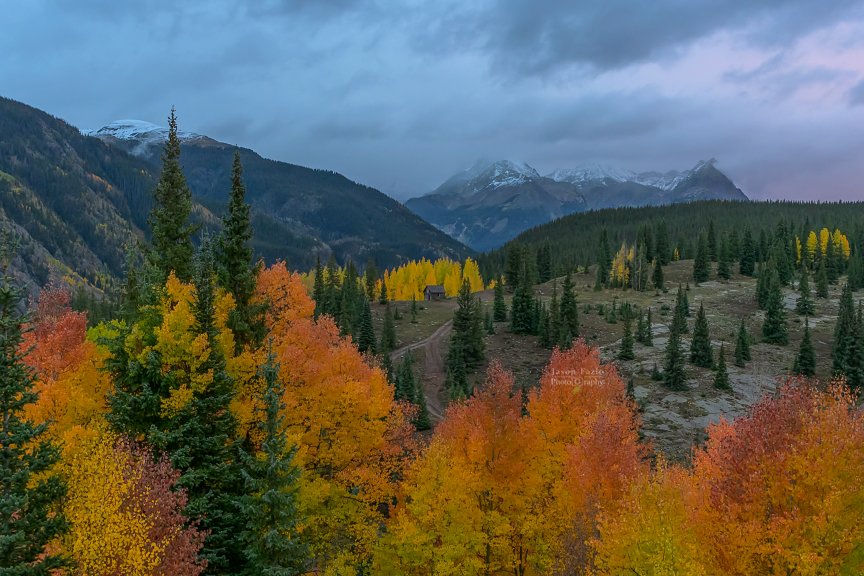
Boy, did I get the leaves. Brilliant yellow, orange, and red aspens surrounded the little cabin while clouds hung over the San Juan Mountains beyond.
What I didn't get was quite the weather I had hoped for. There were plenty of clouds and atmosphere around, but the light never really came together the way I'd envisioned.
Of course, the weather did cooperate.
The day before I got there.
And the day after I left.
Landscape photography has a sense of humor.
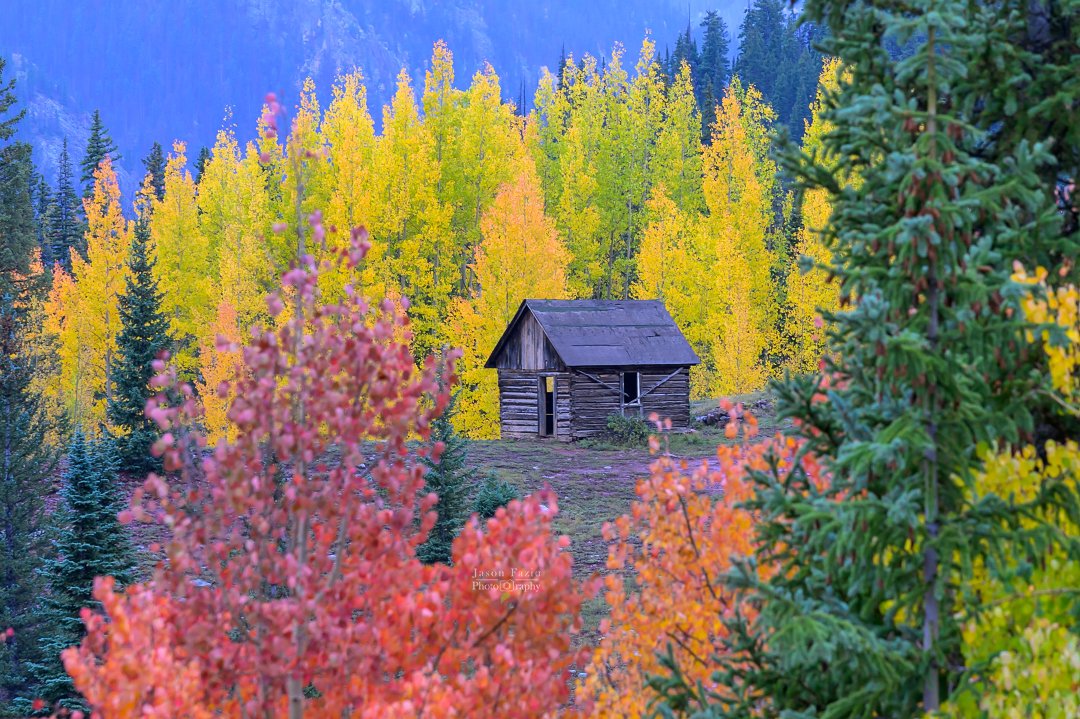
A tighter look at the cabin surrounded by some of the best autumn color I've found here. Now I just need the leaves, light, and weather to cooperate on the same visit.
Apparently, I wasn't the only person hoping everything might come together that evening. By sunset, there were probably eight photographers scattered around the area. Four of them, Chris, Lars, Stan, and Zach, were people I already knew well.
It's a popular spot for a reason.
Sometimes landscape photography is about solitude.
Sometimes it's eight photographers standing beside a highway waiting to see what the sky decides to do.
Both can be fun.
A Change of Plans
My original plan for the following morning was to meet Andy and his workshop participants at Crystal Lake for sunrise.
Then Zach mentioned he was heading back to the cabin before sunrise to photograph it during a moonlit blue hour.
That sounded pretty neat.
So I changed plans.
Again.
I joined Zach at the cabin first, figuring I'd photograph there for a little while and then scoot down to Crystal Lake.
As I climbed out of the FBSH and started walking toward him, I saw a nice shooting star streak across the sky.
My first thought was:
I hope Zach got that.
He did. (I’ve linked it at the end of this blog. Congrats, Zach!)
I couldn't wait to see what he'd captured.
I didn’t end up liking my images.
Then it was off to Crystal Lake.
Fog at Crystal Lake
A thin layer of fog was sitting over the water when I joined Andy and the gang.
Perfect.
I photographed reflections across the lake and spent some time looking for smaller, more intimate compositions around the edges.
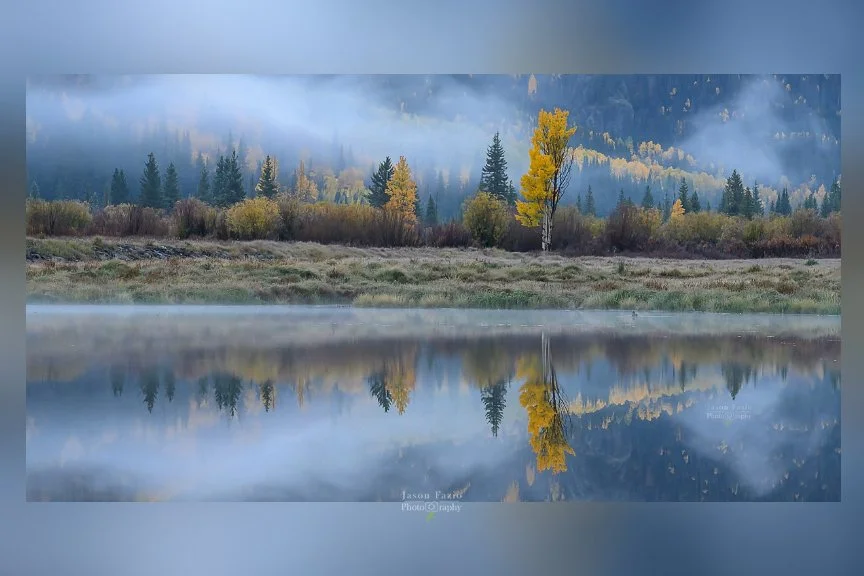
Morning fog drifts among the autumn aspens while the nearly still waters of Crystal Lake reflect the colorful landscape.
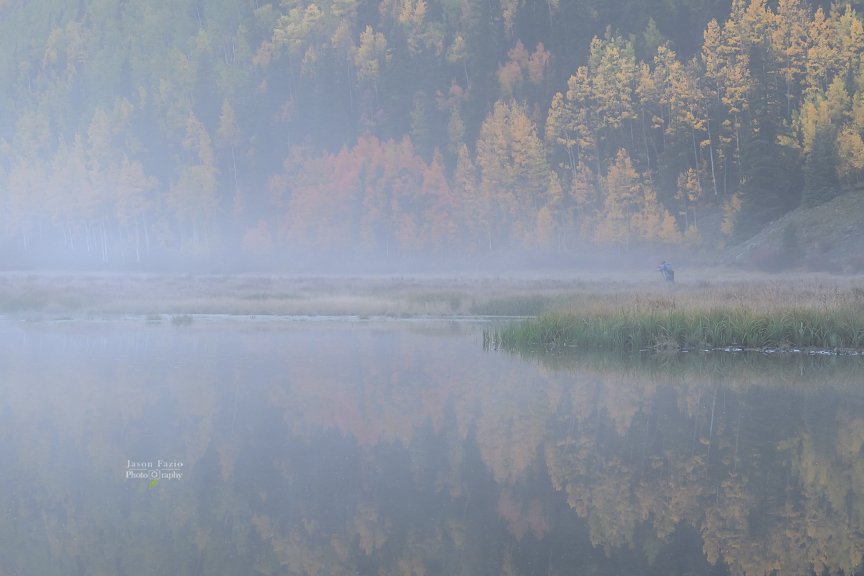
While photographing the morning fog at Crystal Lake, I noticed another photographer standing out in the meadow. He had his camera trained on a pair of moose somewhere in the distant mist.
From my vantage point, the photographer himself became part of the landscape. Surrounded by golden aspens, drifting fog, and their soft reflections in the lake, he provided a subtle sense of scale to an otherwise quiet scene.
Sometimes the most interesting subject isn't the one you're looking for.
Conditions like this are one of the reasons I enjoy teaching landscape photography in the field. You can plan the location, sunrise direction, lens, and composition beforehand, but nature rarely cares about your plan. Fog rolls in. Clouds disappear. Light changes. Sometimes the photograph you leave with isn't remotely the photograph you went there to make.
That's a big part of what I work on during my landscape photography workshops and one-on-one training sessions. Learning the technical side matters, but learning to recognize what the landscape is giving you matters just as much.
Eventually, Andy and I parted ways with plans to meet again later on Corkscrew Pass.
I wasn't in a hurry.
So I allowed myself to get distracted.
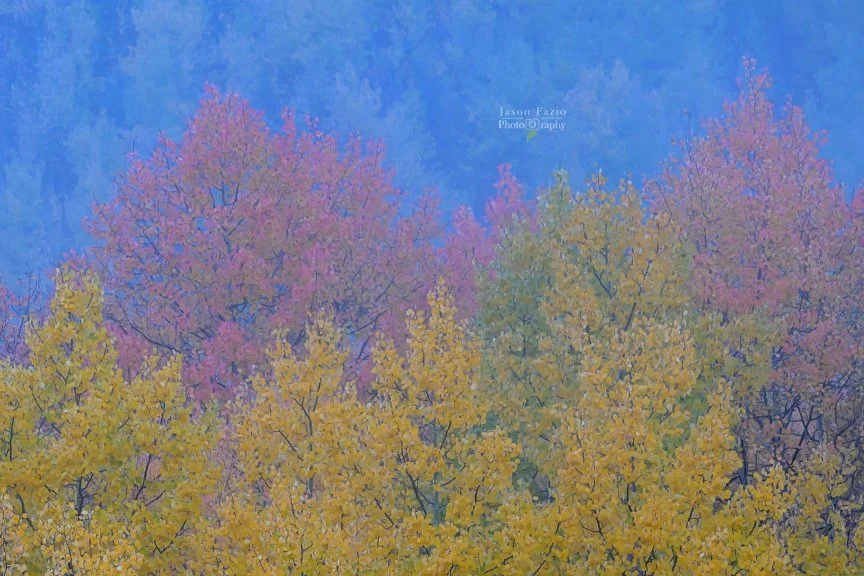
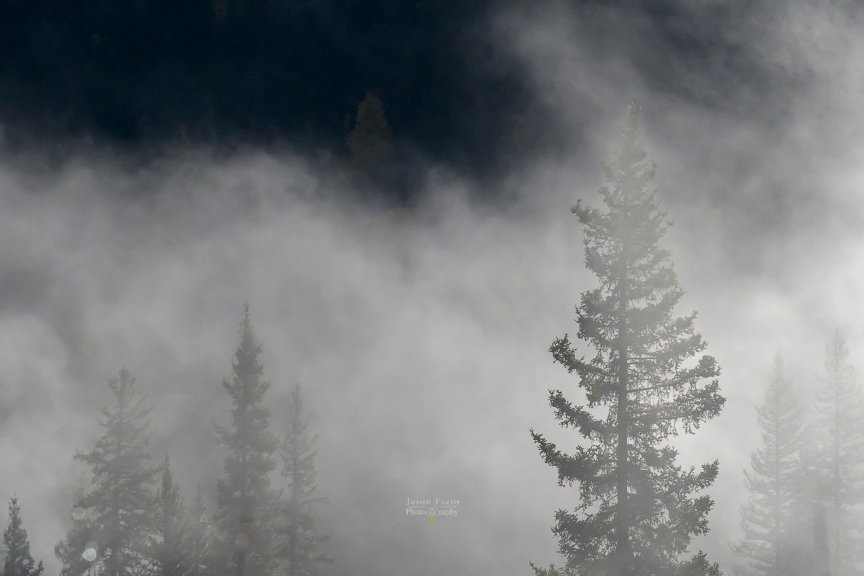
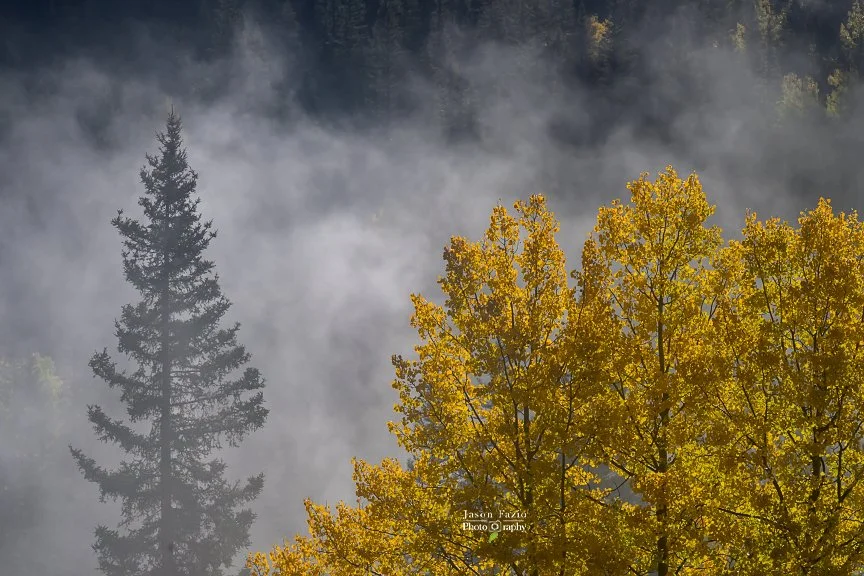
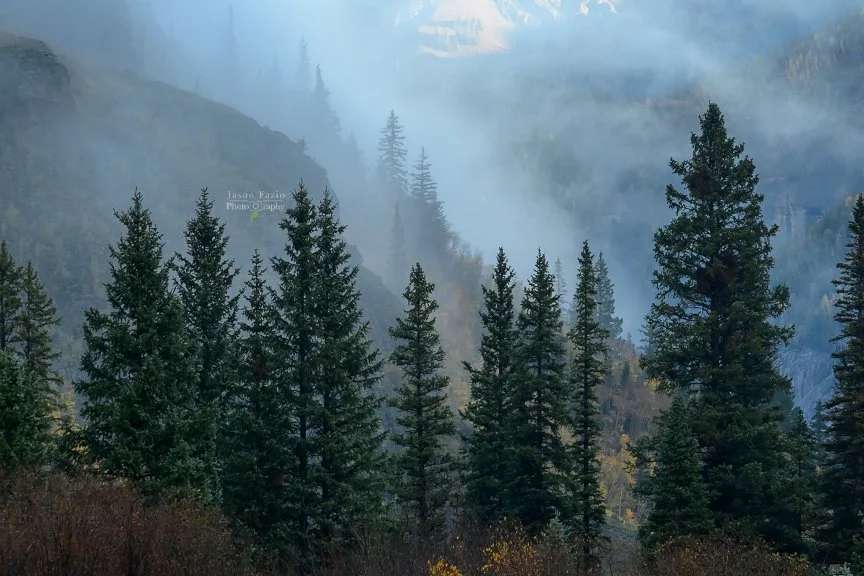
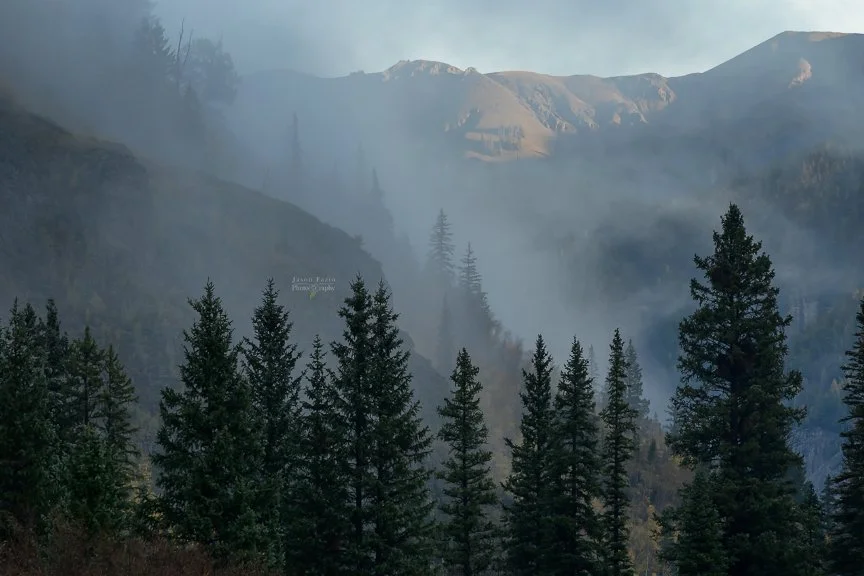
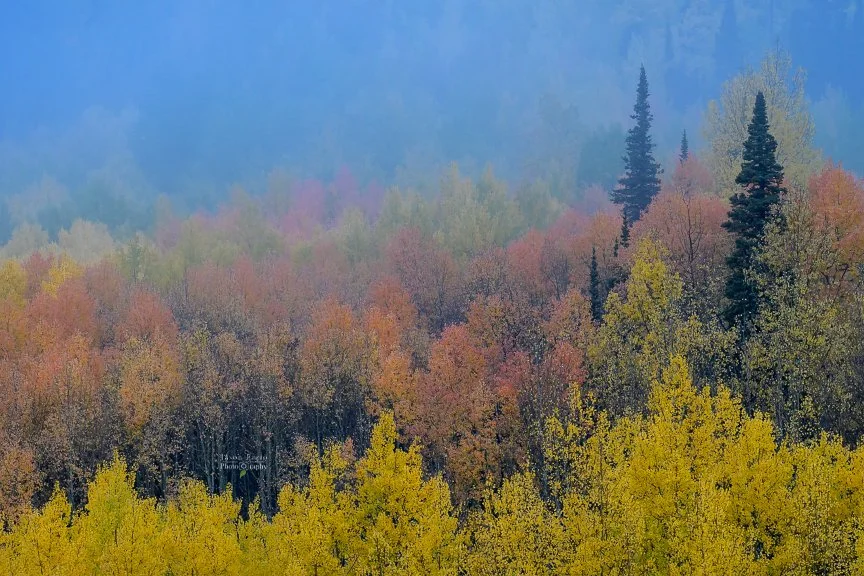
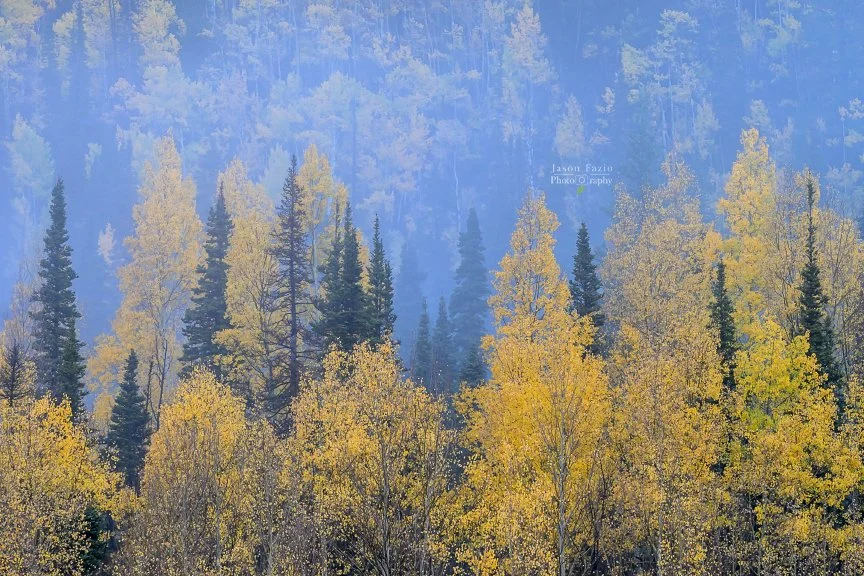
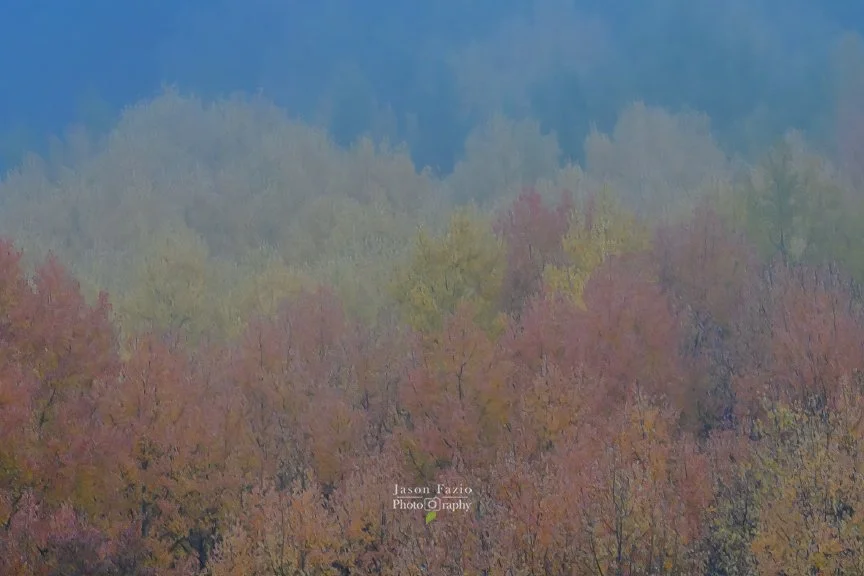
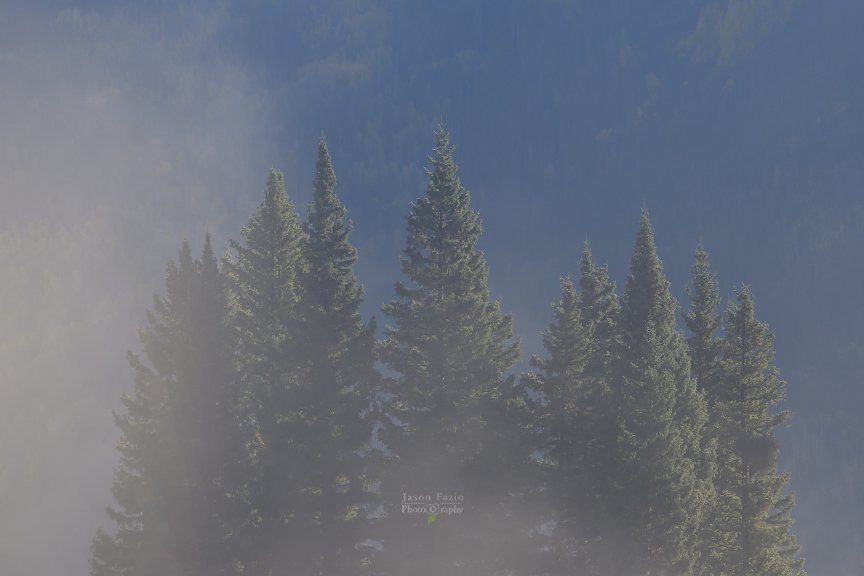
The remaining fog and morning light along Highway 550 were too good to simply drive past.
Up Corkscrew Pass
I'd never driven Corkscrew Pass before, so I really didn't know what to expect.
The climb was scenic but mostly uneventful. The FBSH has a decent turning radius, but a few of those switchbacks still required the ol' two-wiggle maneuver.
There were a couple of sections that made me raise an eyebrow.
Then I reached the top.
That's where the fun really began.
Corkscrew Pass: The Ascent
Climb along with me as I navigate Corkscrew Pass in Colorado's spectacular San Juan Mountains aboard my 1994 Mitsubishi Delica L300 4x4, better known as the Five Billion Star Hotel.
Captured with my Wolfbox G840S dash camera, this video features highlights from the ascent, including winding dirt roads, rugged mountain terrain, and sweeping views of the colorful peaks that make southwestern Colorado such an incredible place to explore.
The scenery alone makes the journey worthwhile, especially when autumn colors and fresh mountain snow share the landscape.
I could have parked and hiked to my intended shooting location, but I planned to camp overnight. Instead, I continued along a side route that would put me closer to the composition I wanted the following morning.
Andy and the boys had planned to meet me up there later.
They never made it.
Apparently, the narrow "roads" and steep drop-offs were a little much for their flatlander blood.
Probably for the best. I had enough trouble finding a place to park one FBSH.
Eventually I found a decent spot just below my intended composition.
A little forward.
A little backward.
A little wiggle.
Good enough.
The FBSH was level.
My shoot wasn't until morning, so for once there was nothing I needed to do.
I had also been noticing these enormous billboard-looking structures perched on some of the surrounding mountaintops.
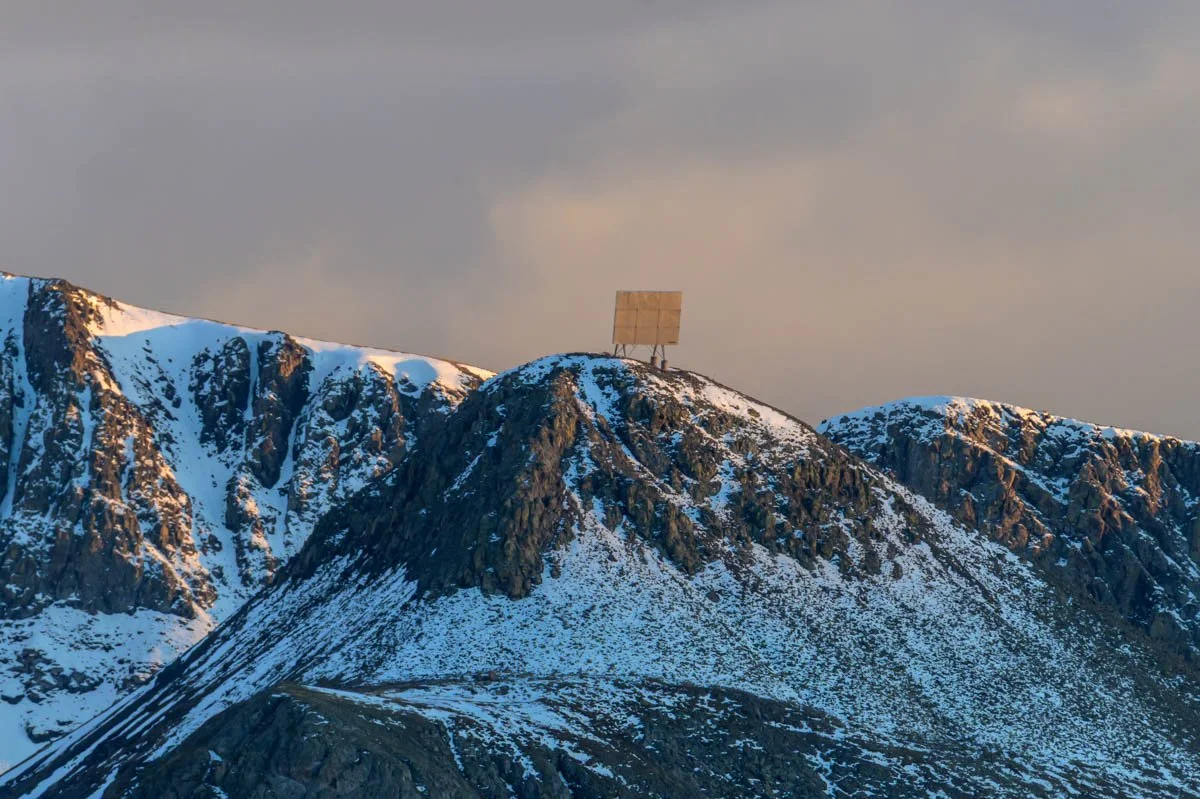
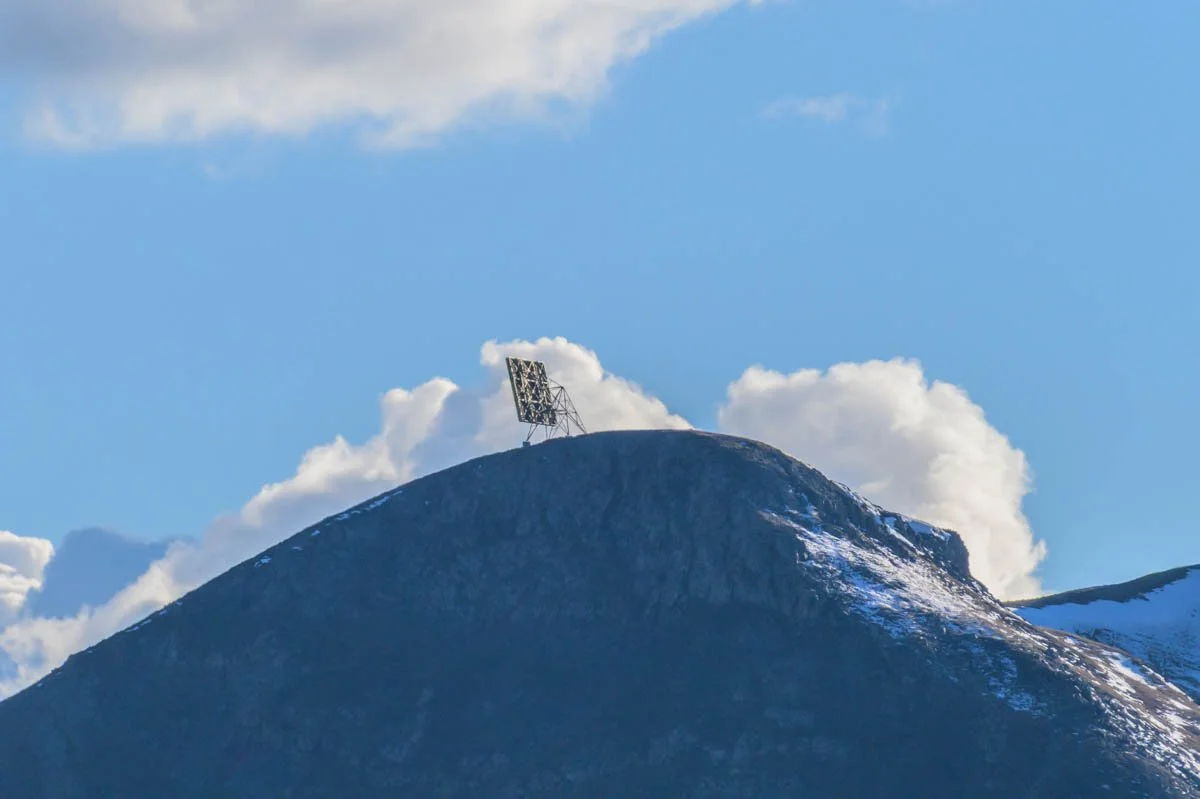
Turns out they're passive microwave reflectors, remnants of a very different way of getting communications through these mountains. Microwave signals require line of sight, which is obviously a bit of a problem in a place like the San Juans. These giant metal panels essentially acted like mirrors, redirecting microwave signals around the terrain.
The Sunset I Wasn't Photographing
Sunset that evening was nice.
Kinda.
My original plan had been to return to the cabin for another sunset attempt.
From my perch high above the San Juans, I could look down the mountain range toward the cabin and see that I was very clearly missing some great conditions down there.
Well...
I'd made my decision.
I had chosen to come up early because I didn't know the road or the area, and I didn't particularly want my first experience navigating it to be in the dark.
Sometimes the responsible decision and the photographically satisfying decision aren't the same decision.
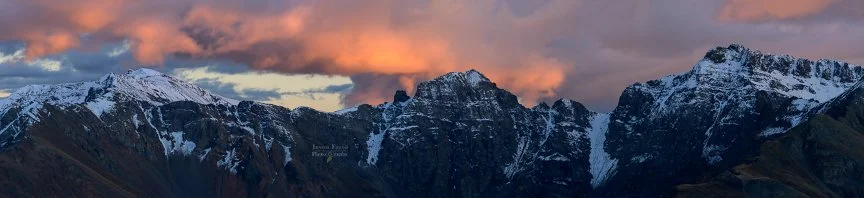
Sunset lights the clouds above the snow-dusted San Juan Mountains, photographed from my campsite at the top of Corkscrew Pass.
I put the cabin out of my mind and settled in for the night.
Mostly.
Just in Time
Morning arrived quickly.
Unfortunately, I killed way too much of it trying to get my diesel heater started.
Apparently, it couldn't breathe at 12,000 feet either.
By the time I finally got myself situated, my leisurely morning had turned into:
You'd better get moving.
I grabbed my gear and started climbing.
By the time I reached my composition, I was breathing hard enough that I probably qualified as part of the foreground interest.
Turns out, I actually did.
I made six versions of the composition that morning. Some without me. In others, I moved around the scene looking for a place where I could add a sense of scale.
This was the one.
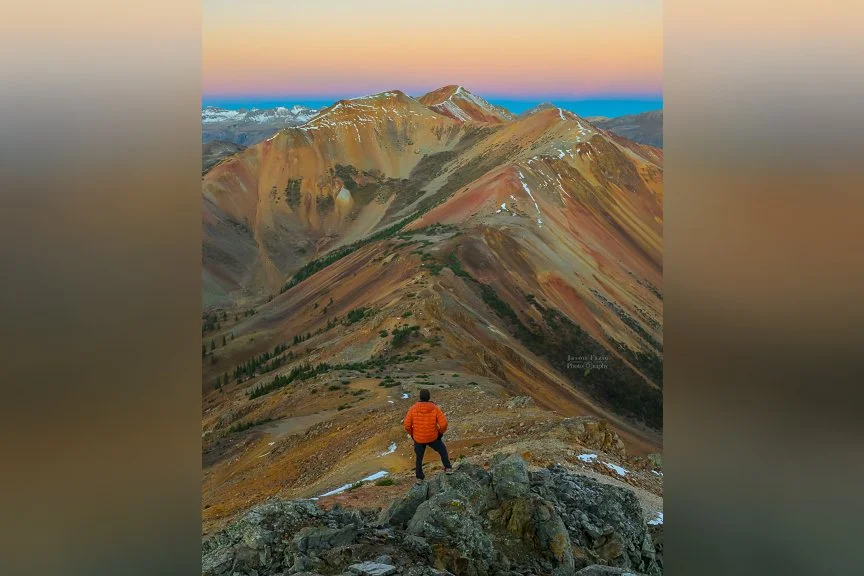
I stepped into the frame to give the landscape some scale as morning light reached the colorful mountains surrounding Corkscrew Pass. Somewhere below me, the Five Billion Star Hotel was waiting for the trip back down.
The sky was simply better in this frame, so it became my favorite of the bunch.
What the finished photograph doesn't show particularly well is just how big this landscape is.
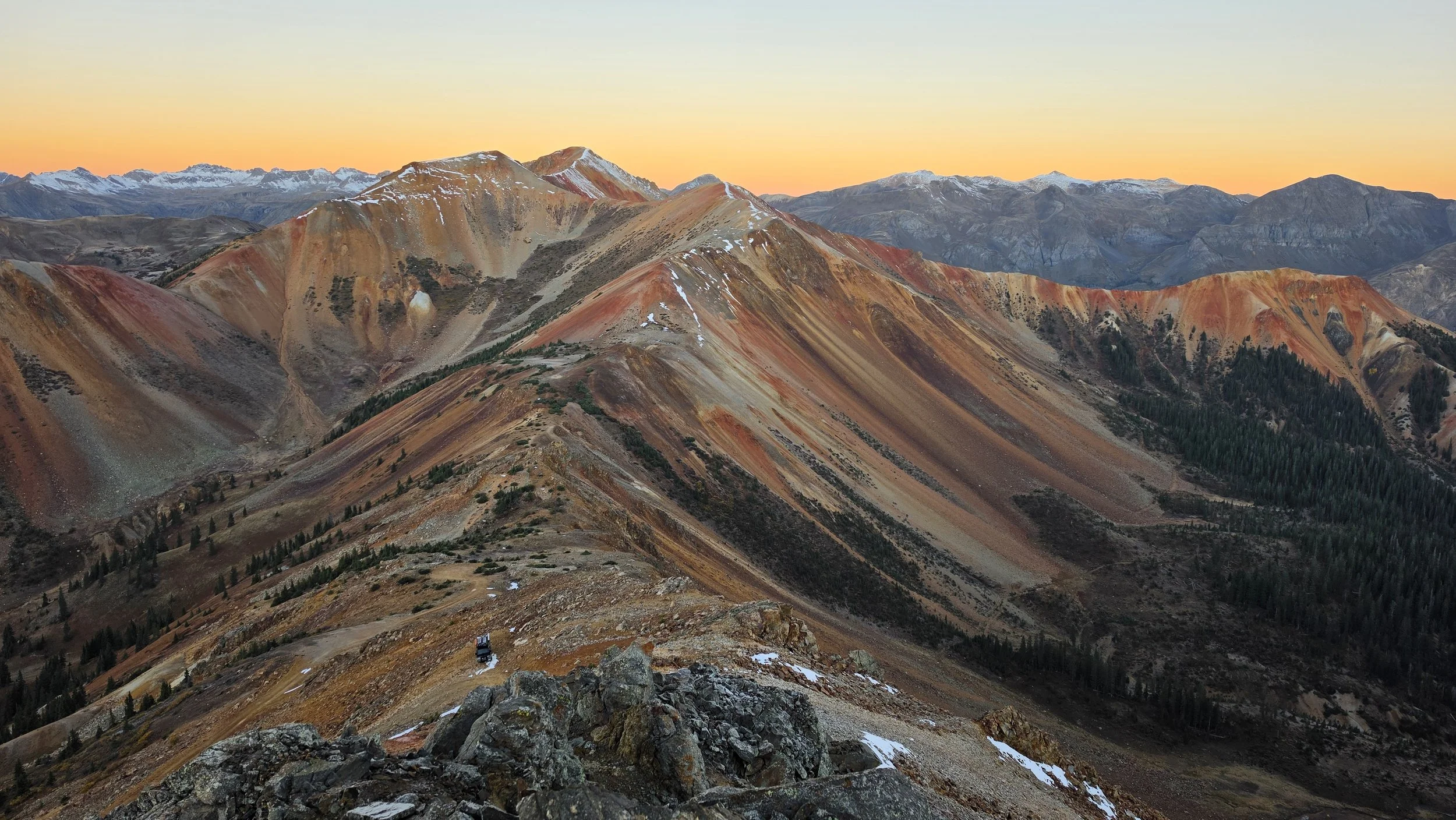
A cellphone photo showing the bigger picture. The Five Billion Star Hotel is parked below my shooting location, which gives a much better sense of the scale of the landscape surrounding Corkscrew Pass.
Looking at that wider view afterward makes my morning breathing problem seem a little more justified.
That's one of those photographs that will always carry more of a memory for me than the image alone can show. The drive, the elevation, the cold, the stubborn heater, the hurried climb and finally standing there watching the morning light arrive.
Those are also the images I tend to enjoy printing most. Some photographs eventually find their way into my Traditional Print collection, while a smaller number become Limited Edition Prints that I produce, number, and sign myself.
A print may show the landscape.
I tend to remember everything that happened outside the frame.
Going Down
What goes up Corkscrew Pass eventually has to come back down.
The descent was... fun.
I didn't particularly want to ride the brakes all the way down, so I put the transmission in low, shifted the FBSH into 4Low and let it crawl.
Slowly.
Very slowly.
Eventually, we made it back down to the Corkscrew Gulch sign.
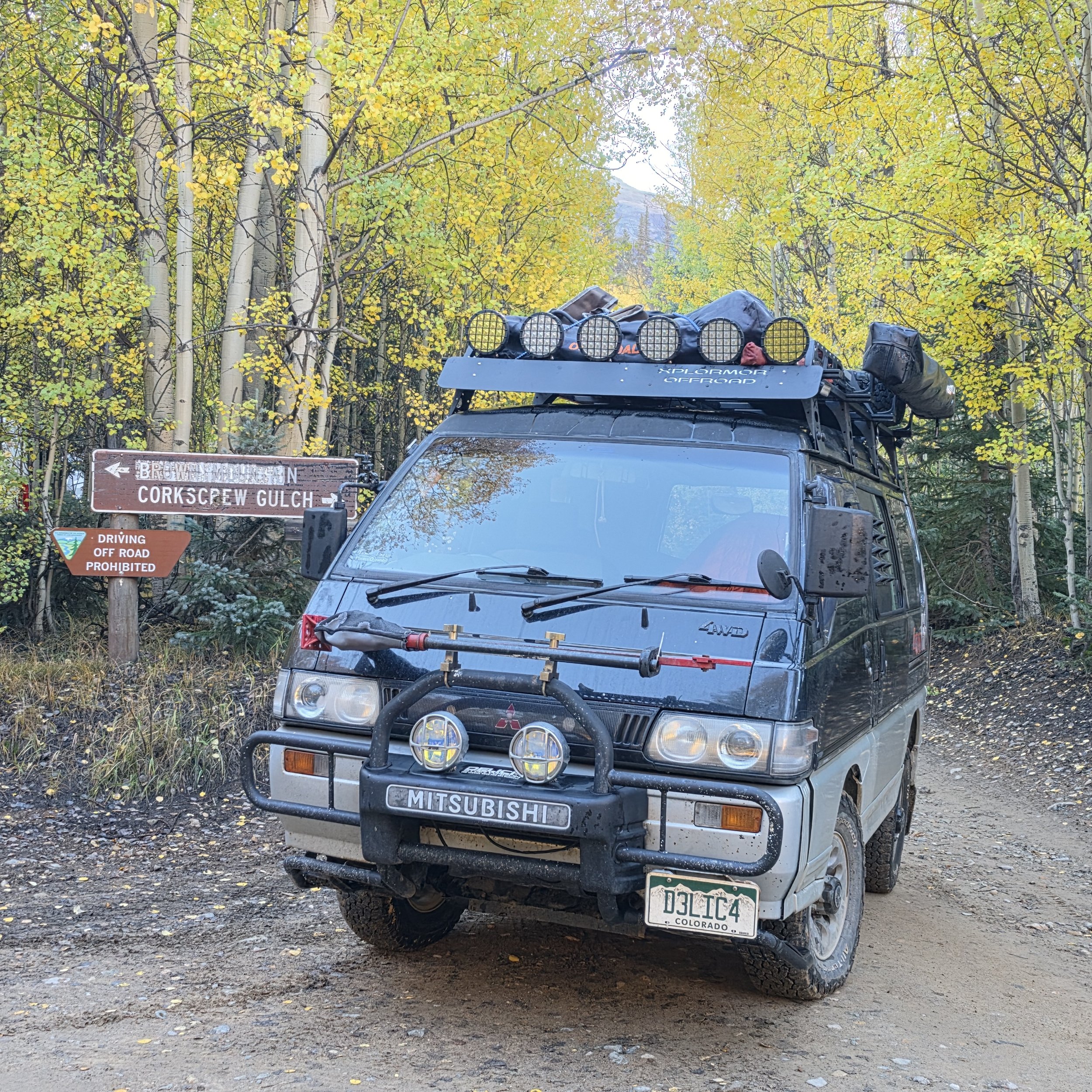
Back down. The Five Billion Star Hotel and I could both breathe a little easier after descending Corkscrew Pass.
The Five Billion Star Hotel could breathe again.
So could I.
Now what?
That question is one of my favorite parts of a photography road trip.
Diesel, Friends and a Train
First things first.
I stopped and spent approximately half a fortune on diesel.
While I was figuring out what to do with the rest of the day, I bumped into Jae and Jonathan. They were headed toward "the Telluride trees."
IYKYK.
I decided instead to grab a cup of coffee and head toward Animas Forks.
At the coffee shop I ran into Chris, who was on his way to photograph the train coming up the pass.
I had time.
Why not?
So I joined him.
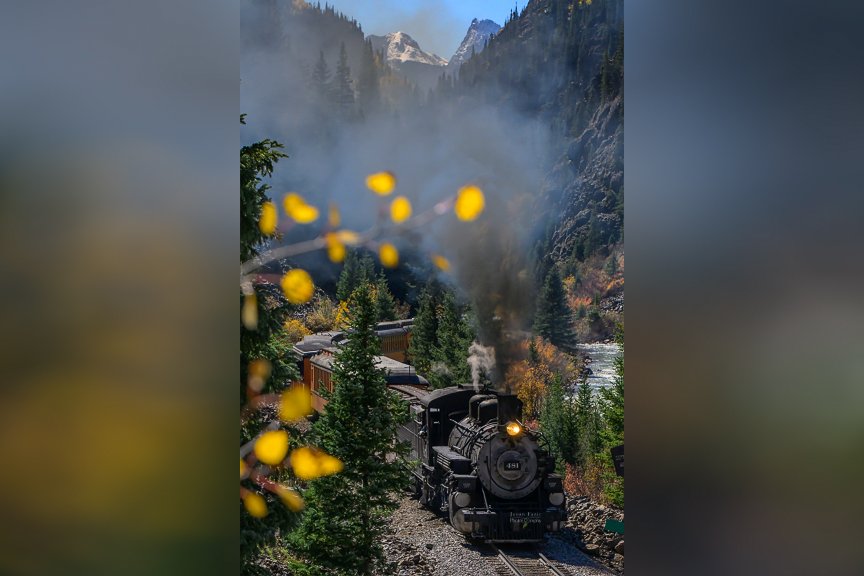
A chance encounter changed my plans for the morning. I joined a friend to photograph the Durango & Silverton Narrow Gauge Railroad as the steam train climbed through the San Juan Mountains surrounded by autumn color.
After Chris and I became unexpectedly separated, and he'll know exactly what I mean by that, I continued toward Animas Forks.
Animas Forks
On my way into Animas Forks, I spotted a river crossing that looked like fun. It wasn't part of my route. I didn't need to cross the river. In fact, there was absolutely no reason to cross it.
Naturally, I had to.
Sometimes the adventure isn't about getting somewhere. It's about finding an excuse to take the long way around. Or, in this case, straight through the water.
Here's a short video of my entirely unnecessary detour.
I'd photographed Animas Forks several years earlier, but I arrived early enough to wander around and scout before sunset.
During the afternoon, the sky looked fantastic.
Naturally, as sunset approached, much of it disappeared.
Landscape photography.
But the evening wasn't a complete loss.
One of the things that caught my attention was an old truck sitting among the remains of the ghost town. As the sun dropped, the last light caught the mountains behind it while a warm glow filled the truck's empty cab.
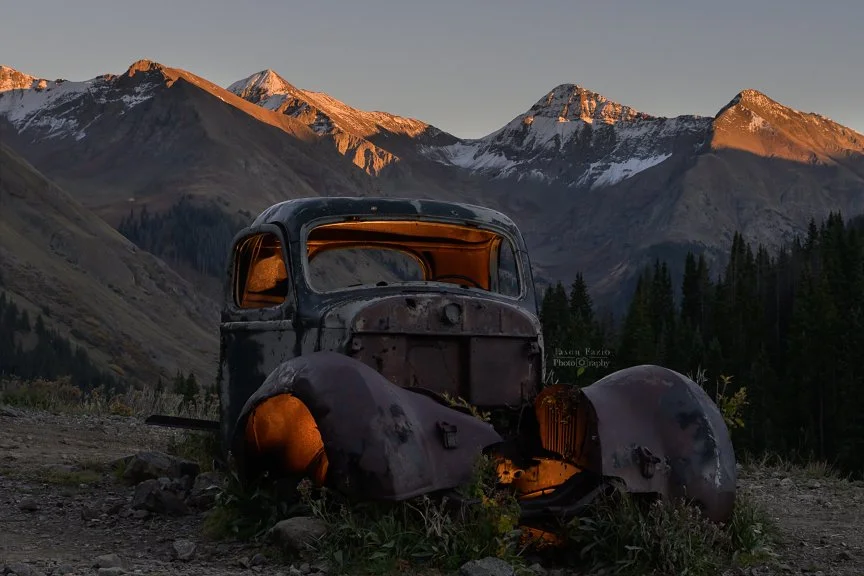
Last Light at Animas Forks | An old truck rests beneath the San Juan Mountains as the final evening light reaches the peaks above Animas Forks Ghost Town.
It wasn't necessarily the photograph I'd gone to Animas Forks hoping to make.
Those have a habit of becoming some of my favorites.
For a while, I had the place almost entirely to myself.
Eventually a Jeep came down into the area.
Later, while I was exploring another composition in the dark, I pulled up near the Jeep.
From somewhere in the darkness, I heard:
"Jason Fazio."
I couldn't see who was talking, although the voice sounded familiar.
"Who's that?"
"Corey Charlick!"
Awesome.
I hadn't talked with Corey in quite a while, so we stood around in the dark catching up.
A few minutes later, as I was leaving Animas Forks, the wildlife apparently decided it wanted in on the trip too.
First a pine marten crossed my path.
Then a porcupine.
Not a bad way to end the evening.
Owl Creek Pass
My next destination was Owl Creek Pass.
I was particularly curious about what I'd find there after the recent wildfire activity. Driving through at night didn't tell me much.
Morning would.
I photographed Deb's Meadow in the early light.
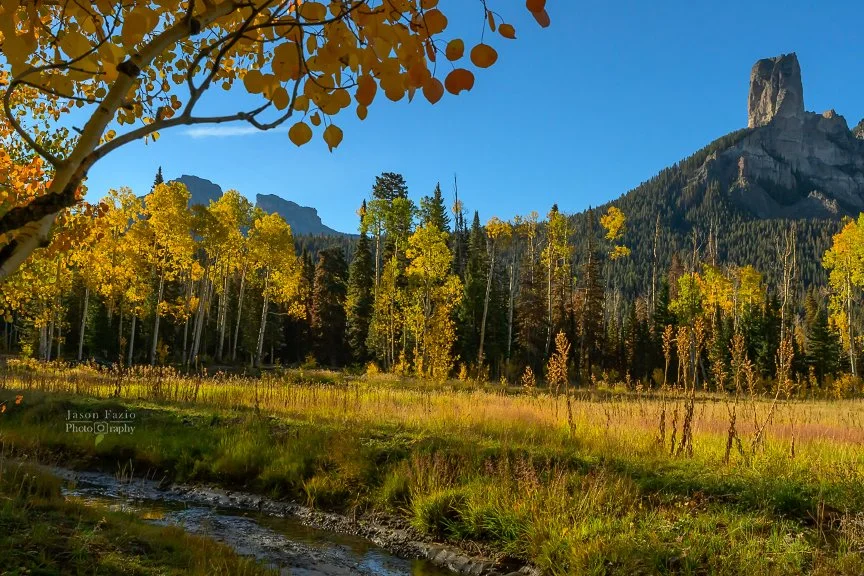
Autumn colors at Deb's Meadow with Chimney Rock rising above the landscape along Owl Creek Pass, Colorado.
Unfortunately, the irrigation ditch running through the meadow was basically dry.
Boo.
Reflections would have been nice, but the landscape doesn't take requests.
Just up the hillside, the evidence of the fire became much more apparent. Burned areas came right up against portions of the meadow.
A Little Hollywood History
This quiet meadow has seen a bit more action than my photograph might suggest. Deb's Meadow was used for the climactic showdown in the 1969 John Wayne classic True Grit. With Chimney Rock towering in the background, Rooster Cogburn famously took his horse's reins in his teeth and charged across this very meadow toward Ned Pepper and his gang, guns blazing.
And the Hollywood connection doesn't end there. Deb's Meadow takes its name from actress Debbie Reynolds, who also filmed in this area. Long before I arrived with a camera looking for autumn colors, this little meadow in the Colorado mountains had already spent some time on the big screen.
Visit Ridgway CBS News
A photograph only shows what I decided to point the camera toward. This short video offers a wider look at the landscape around Deb's Meadow, including Chimney Rock and the contrast between areas touched by wildfire and those still covered in autumn color.
It's strange photographing a beautiful autumn morning while standing so close to a landscape that has recently burned.
Both things can exist in the same place.
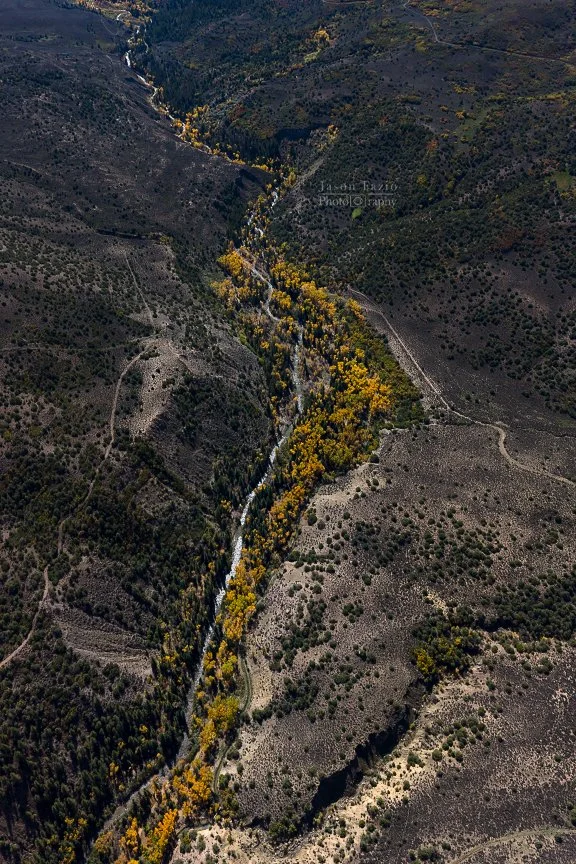
A ribbon of golden aspens winds through the rugged landscape below Owl Creek Pass. Captured by drone while traveling toward Ohio Pass during my 2026 autumn photography trip through Colorado.
Ohio Pass to Kebler Pass
As I made my way out of Owl Creek Pass toward Ohio Pass, I spotted a ribbon of golden aspens winding through the otherwise muted landscape. From the ground, it was an interesting contrast. From above, the drone revealed something entirely different.
A narrow corridor of autumn color followed the creek through the hills, almost as though someone had drawn a golden line across the landscape.
I had one evening left.
Kebler Pass.
On the way there, I wandered through Ohio Pass.
It was the middle of the day. The light wasn't particularly exciting, and I had those wonderfully boring blue skies that landscape photographers dream about.
So I went into the trees.
Instead of fighting the conditions, I looked for a way to use them. I got underneath a fern wearing its golden autumn colors and photographed upward through it and the equally golden aspens above. Suddenly that boring blue sky had a purpose. It became the complementary color behind all that gold.
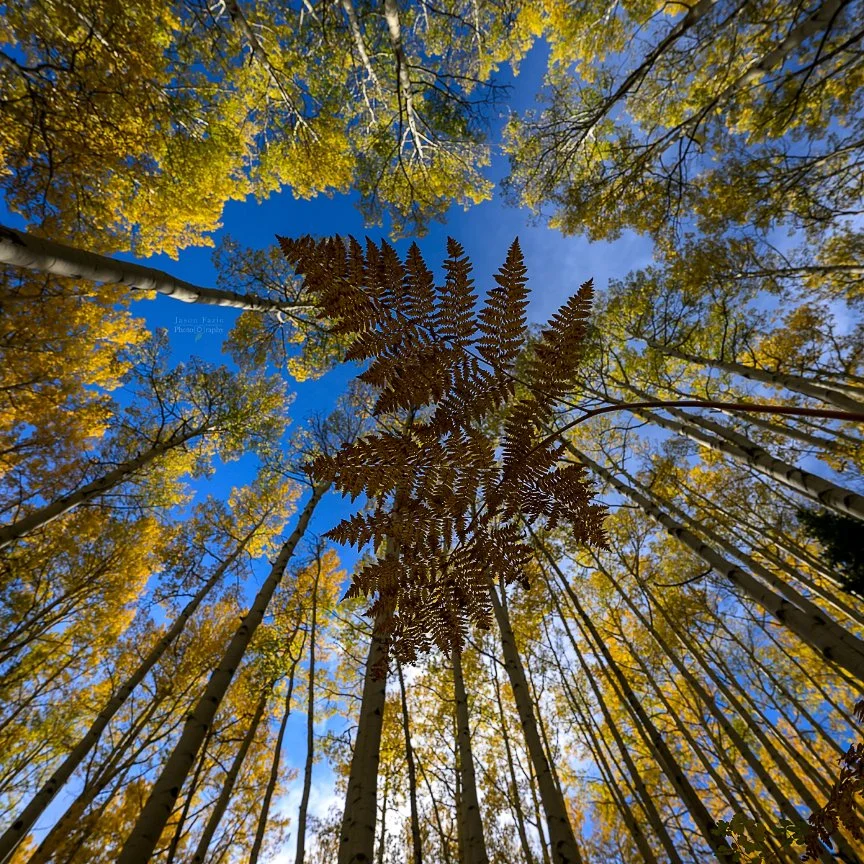
With midday light and a cloudless blue sky, I headed into the trees along Ohio Pass. A golden fern beneath the aspens turned less-than-ideal landscape photography conditions into a completely different perspective.
Deciding What Matters
Sometimes the answer isn't waiting around for better conditions.
It's finding a different photograph.
Sometimes composition is only part of the decision.
These three photographs were made from essentially the same spot, with the same composition and only one significant difference: where I chose to focus.
In one, the distant mountains are sharp while the autumn trees are allowed to soften. In another, I focused on the colorful trees and let the mountains fall out of focus. For the third, I combined exposures so both foreground and background remain sharp.
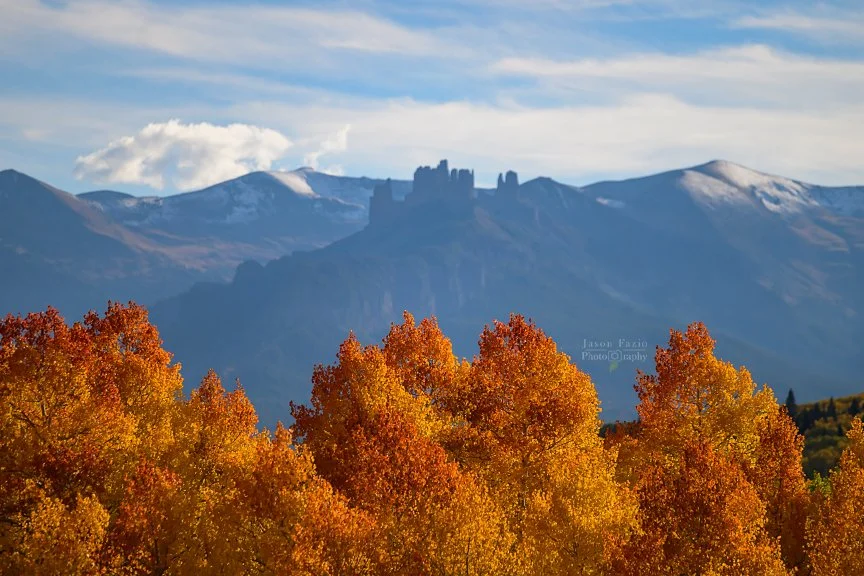
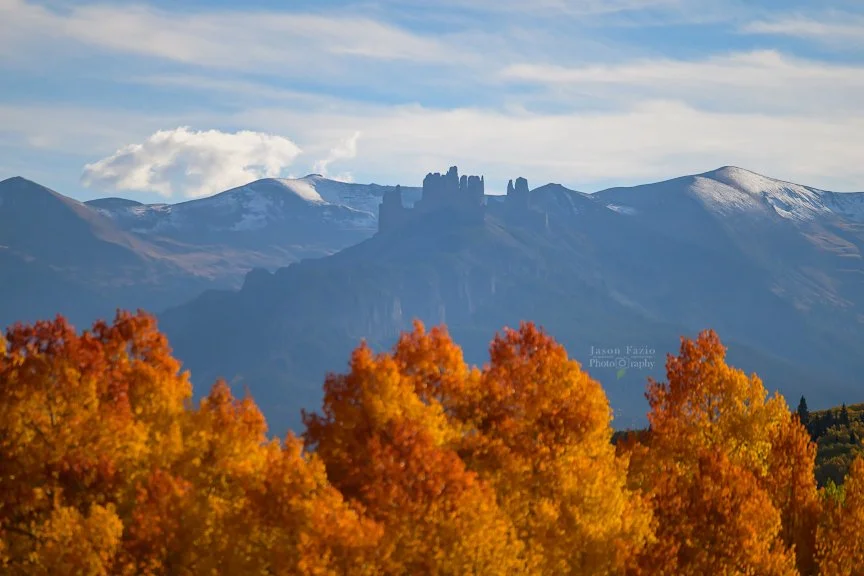
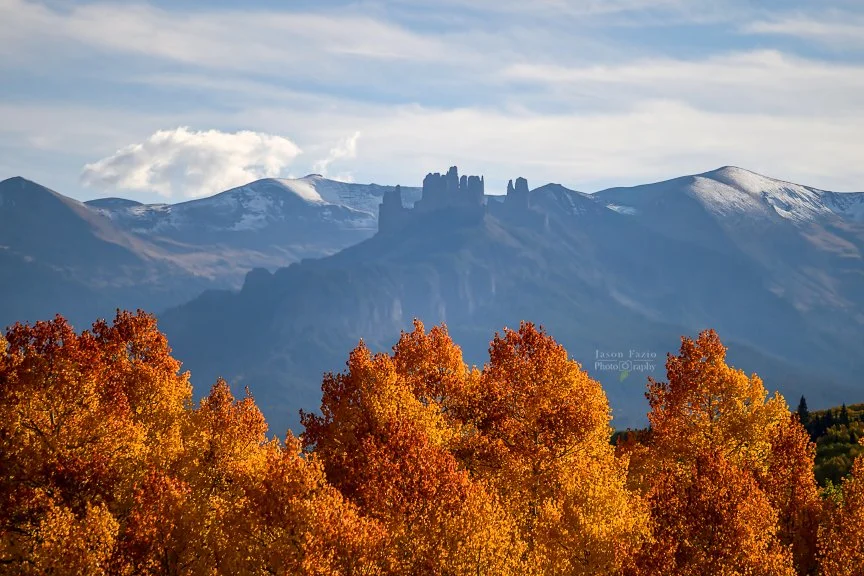
Which one is correct?
Potentially, all three.
As photographers, one of our jobs is deciding what the subject of the photograph actually is. Focus is one of the tools we have for communicating that decision to the viewer. If the mountains are the subject, allowing the foreground to soften can help lead the eye toward them. If the autumn color is what caught my attention, I can reverse that relationship.
And just because I can make everything sharp doesn't necessarily mean I should.
Depth of field isn't simply a technical problem to solve. It can be a creative decision. What I choose to leave out of focus can sometimes be just as important as what I choose to keep sharp.
That's one more tool in the photographer's toolbox.
By evening I was positioned along Kebler Pass.
I'd spent much of the trip looking for individual compositions. A cabin. A reflection. A train. A fern. This time, I put the drone in the air and looked at the landscape from above.
From that perspective, the mountainsides became patches of yellow, orange, red, green, and the pale trunks of aspens that had already dropped their leaves. It looked less like individual stands of trees and more like one enormous tapestry.
Hence the name.
Kebler Tapestry.
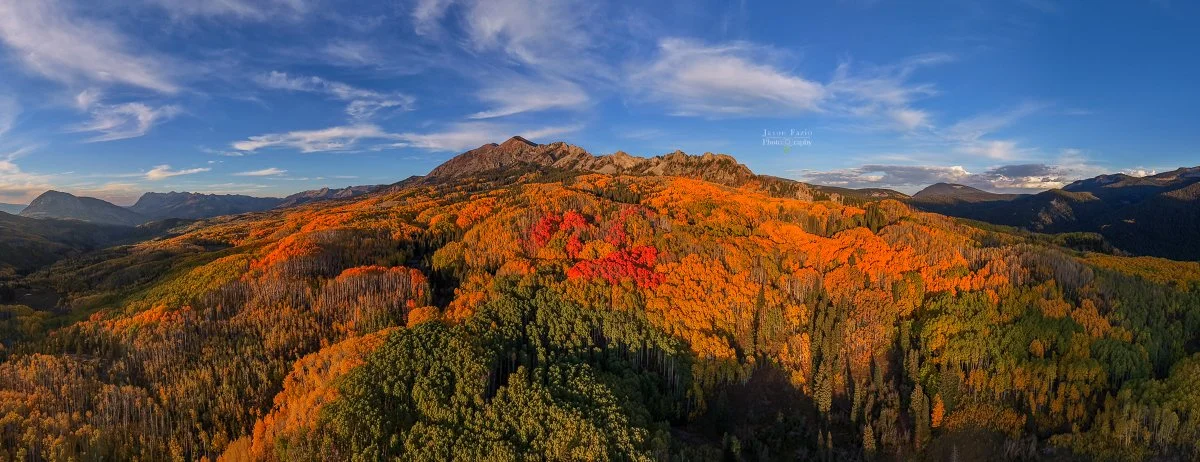
Kebler Tapestry | From above, the enormous aspen forests of Kebler Pass become a tapestry of orange, yellow, red, and green in the evening light.
The evening light cooperated, sweeping across portions of the landscape while other areas fell into shadow.
After several days of chasing light, changing plans, climbing passes and wondering where I needed to be next, I had absolutely nothing planned for the following sunrise.
And that felt pretty good.
One Last Tradition
I did have one plan.
Breakfast.
Whenever I'm in Crested Butte, I try to eat at Paradise Cafe at least once. It's become one of my little traditions.
But first, there was one more sunrise.
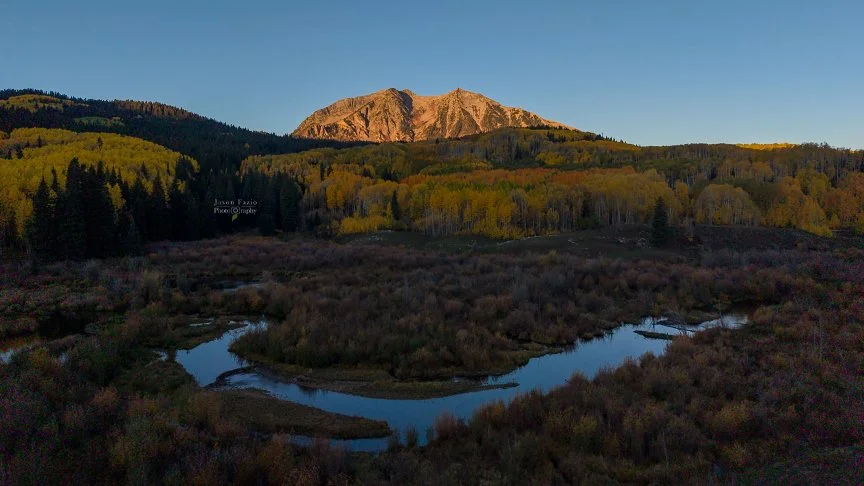
The first sunlight of the morning illuminates a distant mountain peak while golden aspens and a winding creek remain in the shadows below. A peaceful autumn morning near Kebler Pass, Colorado.
I didn't have a particular composition in mind that morning. Instead, I found a spot along Kebler Pass, set up my Nikon to periodically take a photograph, and let it quietly document the changing light while I put the drone in the air.
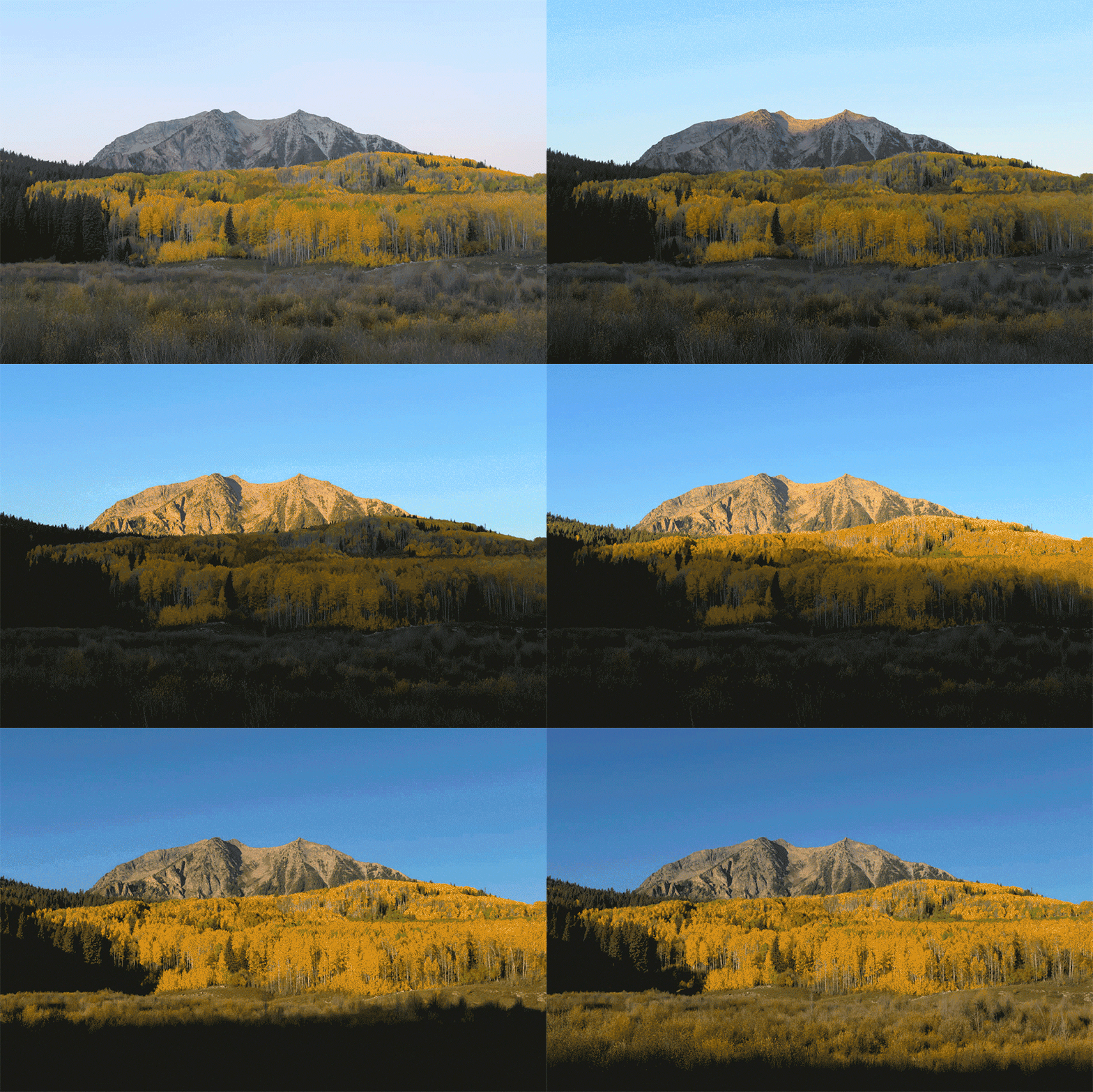
While I flew the drone on my final morning, I left my Nikon photographing the sunrise along Kebler Pass. I later combined several of those frames into this short time-lapse.
Meanwhile, I was looking down into the aspen forests from above. The remaining golden leaves, pale trunks, and dark forest floor created an entirely different perspective on the autumn landscape.
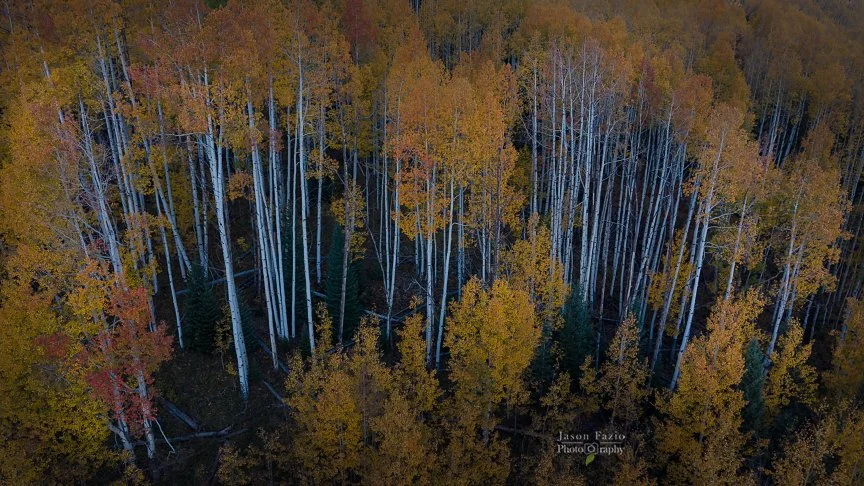
Autumn's Last Stand | A final morning above the aspen forests of Kebler Pass, where golden leaves and pale trunks stand out against the shadows below.
It was a pretty relaxing way to spend my final morning.
Until it wasn't.
At one point, I had the drone flying over a landscape of swampy bushes and beaver dams.
Then came the low-battery alarm.
Okay. Time to come home.
Then came the critically low battery alarm.
Not okay.
There wasn't exactly a convenient emergency landing zone beneath the drone. If it didn't make it back to where I'd launched it, there was a pretty good chance I wasn't getting it back.
Swamp.
Bushes.
Beaver dams.
Pick your poison.
I watched the battery continue to disappear while bringing the drone home as quickly as I could.
It made it.
Barely.
I suspect I came within seconds of learning exactly how low you can run a drone battery before gravity takes over.
That's one experiment I don't particularly need to repeat.
With both the drone and my wallet still intact, I continued toward Crested Butte.
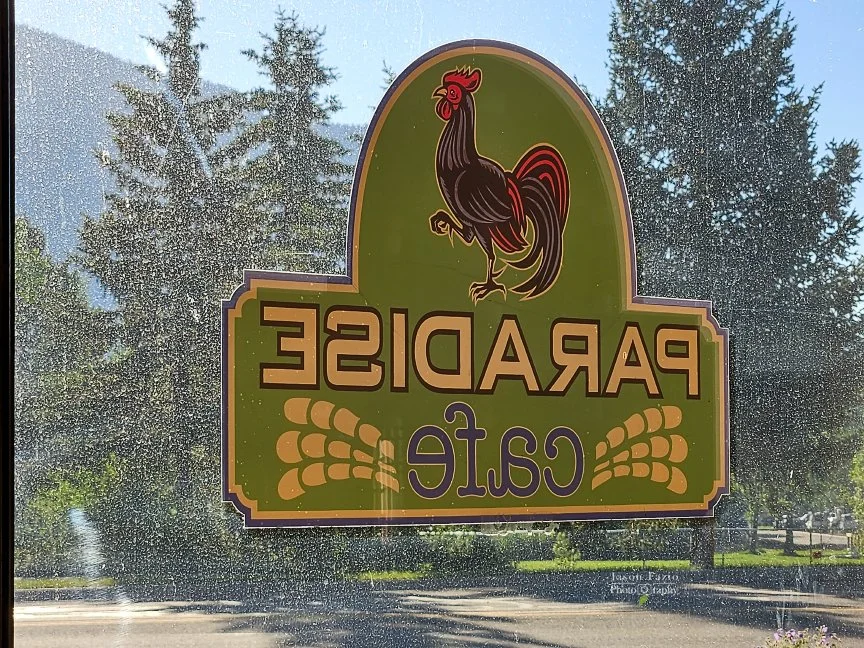
One last tradition before heading home. Breakfast at Paradise Cafe in Crested Butte, Colorado, after several days photographing autumn throughout the mountains.
Breakfast was good, as usual.
I can't eat much in one sitting, so I ordered a breakfast sandwich and took half of it with me.
That half sandwich managed to survive the trip through Cottonwood Pass, Buena Vista, Wilkerson Pass, and Woodland Park.
Eventually, the mountains gave way to familiar roads.
Monument.
Home.
Until the Next One
Trips like this rarely unfold exactly the way I imagine them.
The weather changes. Someone calls with a better idea. Fog appears. A shooting star streaks through the frame. A diesel heater refuses to cooperate. A drone nearly becomes permanent beaver habitat. You unexpectedly run into friends in coffee shops, on mountain passes, and even in the dark at an old mining town.
That's a big part of why I keep going.
I came home with photographs from Silverton, Crystal Lake, Corkscrew Pass, Animas Forks, Owl Creek Pass, Ohio Pass and Kebler Pass.
But the photographs are only part of the trip.
If you'd like to bring some of these landscapes home, many of my photographs are available as Traditional Prints, while selected images are offered as Limited Edition Prints that I personally produce, number, stamp, and sign.
If you'd rather learn how to make your own, I also offer landscape photography workshops and one-on-one training, both in the field and on the computer.
And if you'd simply like twelve of my photographs hanging on your wall throughout the coming year, my 2027 Landscape Photography Calendar is available now.
As for me?
I'm home.
For now.
The aspens near Mueller were looking awfully good on the way out...
Don’t forget, go see Zach’s awesome Molas Pass Cabin image!