Social Media & The 10% Rule: Seven Years Later
Bottom Line Up Front
Seven years ago, I wrote that creators should spend less time building someone else's platform and more time building something they actually own.
I should have listened to myself a little more closely.
Back in 2019, I wrote a blog called Social Media & The 10% Rule. The idea was pretty simple.
Spend about 10% of your effort on social media and 90% creating content somewhere you control.
Your website.
Your blog.
Your email list.
Your photographs.
Your products.
Your business.
Social media was supposed to be the road that led people to those things. It wasn't supposed to become the destination.
Seven years later, I went back and read that blog.
You know what struck me first?
It was still there.
I couldn't begin to tell you what I posted on Facebook that week in August 2019. I don't know how many Likes those posts received. I don't remember how many people Facebook showed them to. I don't remember whether they performed well, performed poorly, or disappeared into the social-media abyss five minutes after I posted them.
But the blog?
I can still read it.
So can you.
And now I'm writing another one because of it.
Maybe 2019 Jason was onto something.
The 10% Rule
The 10% Rule was never really about the number.
Ten percent wasn't the result of some carefully controlled scientific study conducted by a team of highly trained social-media scientists wearing white lab coats.
It was a reminder.
Don't spend all your time building on rented land.
Social media companies make the rules.
They decide what gets shown.
They decide what doesn't.
They decide what you can post, how you can post it, who sees it, whether links are encouraged or discouraged, what qualifies as engagement, and increasingly, what you're going to have to pay for.
You can spend years building an audience there.
But you don't own the platform.
You don't own the algorithm.
And, as I've recently been reminded, you don't even necessarily control your ability to reach the people who chose to follow you.
Facebook and I Are Currently Seeing Other People
Recently, Facebook asked me to verify my account.
Fair enough.
I attempted to do so.
Something went wrong.
Maybe the photograph I submitted of my identification wasn't good enough. Maybe I did something incorrectly. Maybe Facebook's system got hung up somewhere along the way.
I honestly don't know.
What I do know is that the verification failed.
Then something particularly helpful happened.
Facebook removed my ability to try again.
And, for good measure, restricted my account for three months.
I'm apparently eligible for parole sometime in mid-October.
Naturally, my reach has suffered.
My presence on Facebook has declined. Engagement has declined. My following has declined.
I could be upset about those things.
But that would miss the larger point.
I spent years building an audience on property I don't own.
Then the property owner changed the rules.
That's exactly what I was warning myself about seven years ago.
I Barely Recognize the Place
The Facebook I joined and the Facebook I use today barely resemble one another.
Remember when your Facebook Wall was mostly filled with things posted by people you knew?
What a concept.
You became friends with someone because you wanted to see what they were doing.
You followed a photographer because you wanted to see their photographs.
You followed a business because you wanted to hear from that business.
Somewhere along the way, "Follow" stopped reliably meaning, "I'd like to see this person's stuff."
Today, I can scroll through Facebook and encounter suggested posts, sponsored posts, Reels, recommended Pages, groups I don't belong to, people I don't follow, and content selected because an algorithm has determined that I might spend another 2.7 seconds looking at it.
Somewhere in there, I might even find something from someone I actually chose to follow.
Progress!
Meanwhile, Here Come the Six-Fingered People
I've written before about my concerns with AI-generated content.
I'm not anti-AI.
I use AI.
I think there are some remarkable tools available to photographers, writers, artists, businesses, and ordinary people. I've also written before that I don't believe all uses of AI are equal.
What bothers me is watching obvious AI-generated content, sometimes requiring very little effort and representing absolutely nothing that actually happened, spread wildly across social media while the work of actual creators struggles for visibility.
A landscape photographer may drive hundreds of miles.
Scout.
Hike.
Wait.
Get skunked.
Come back another day.
Get up at 3:30 in the morning.
Stand in the cold.
Wait for the light.
Take the photograph.
Drive home.
Process it.
Write something about the experience.
Post it.
Then watch Facebook show it to seventeen people and a house made entirely out of cheeseburgers to 4.3 million.
Okay, I made those numbers up.
The cheeseburger house probably did better.
That's frustrating, but it also exposes something important about what social media has become.
The system doesn't necessarily reward effort.
It rewards attention.
Those aren't the same thing.
We Helped Build This
I've also written about the role we play in all of this.
Someone posts something obviously fake.
We comment to tell them it's fake.
Someone deliberately identifies a location incorrectly.
We rush in to correct them.
Someone posts something ridiculous.
We share it because we want our friends to see how ridiculous it is.
Congratulations.
We just helped distribute it.
The algorithm doesn't necessarily care whether we're applauding, arguing, correcting, laughing, or throwing tomatoes.
We interacted.
And interaction is valuable.
That realization changed the way I think about my own behavior on social media.
Sometimes the best response to garbage isn't an angry-face reaction.
It's no reaction at all.
Keep scrolling.
Now They Want Me to Pay for the Exit Sign
This brings me to one of my newest frustrations.
Hyperlinks.
My original 10% Rule depended upon a pretty basic relationship with social media:
Create something valuable somewhere you control.
Tell people about it on social media.
Give them a link so they can go see it.
Simple.
Except Facebook increasingly doesn't seem particularly interested in helping people leave Facebook.
Now, I'm being asked to pay a monthly fee for the ability to use hyperlinks the way I want to use them.
Let's make sure I understand the arrangement.
I create the photographs.
I buy the cameras.
I pay for the fuel.
I drive to the locations.
I hike.
I wait.
I freeze.
I get rained on.
I edit the photographs.
I write the stories.
I provide Facebook with content that gives people a reason to open Facebook.
And now Facebook would like me to pay them for the privilege of showing you where you can find more of my work.
That's an interesting arrangement.
Facebook is a multibillion-dollar company.
I'm one landscape photographer.
I think they'll be okay without my monthly contribution.
This Isn't a Breakup Letter
Despite everything I've just written, I'm not leaving social media.
There are things I genuinely like about it.
I've met wonderful people because of photography and social media.
People have followed my travels, purchased my work, joined me on photography outings, supported my projects, laughed at my dumb jokes, offered encouragement, shared their own stories, and become people I genuinely enjoy hearing from.
Those relationships are real even if the platform hosting them is increasingly strange.
Social media can still introduce my photography to someone who has never seen it.
It can still start conversations.
It can still create community.
It can still be fun.
I'm not deleting Facebook.
I'm demoting it.
The Website Is Home
That's the part I think I understood intellectually in 2019 but didn't always practice as well as I should have.
My website is home.
Social media isn't.
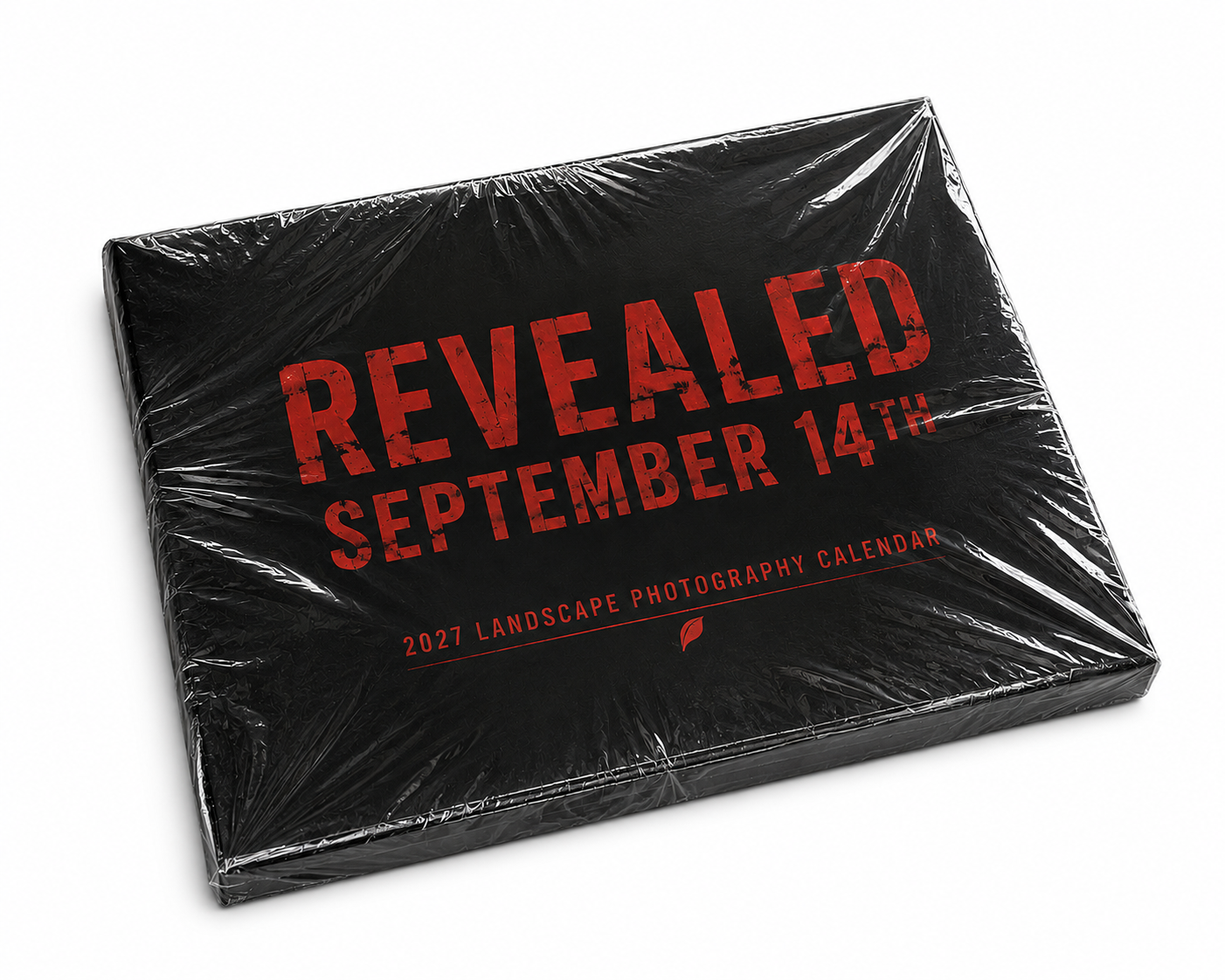
Calendar images will be revealed on 14 September 2026
ps - Facebook allows 2 links per month without paying for an upgraded account. Tho, how much they'll promote those two links i’m not sure.